
USAP Approved Joola Clone for $92?!
Luzz Pro Cannon Review + Black Friday Sale!

Check out my IG post on this paddle!
Many of you know that Joola paddles cost nearly $300 MSRP for top tier performance, which explains why clone paddles on Alibaba/AliExpress are so popular. However, these clones come at a cost of inconsistent quality among sellers/manufactures and also complete lack of USAP/UPAA tournament approval.
Not anymore.
The Luzz Pro-Cannon [affiliate link] (discount code “DYPickleball” for 15% off), gives you BETTER than $280 Joola Pro IV performance for only $92 while sporting dual USAP/UPAA tournament approval.
With a cost that is only a few tens of dollars higher than an Alibaba clone paddle, you can enter tournaments and take advantage of Luzz’s generous 1 year warranty.
The original Cannon’s design is very unassuming. But if you’d like a little bit more flare they also have a Kung Fu Panda and a pink Candy design as well.
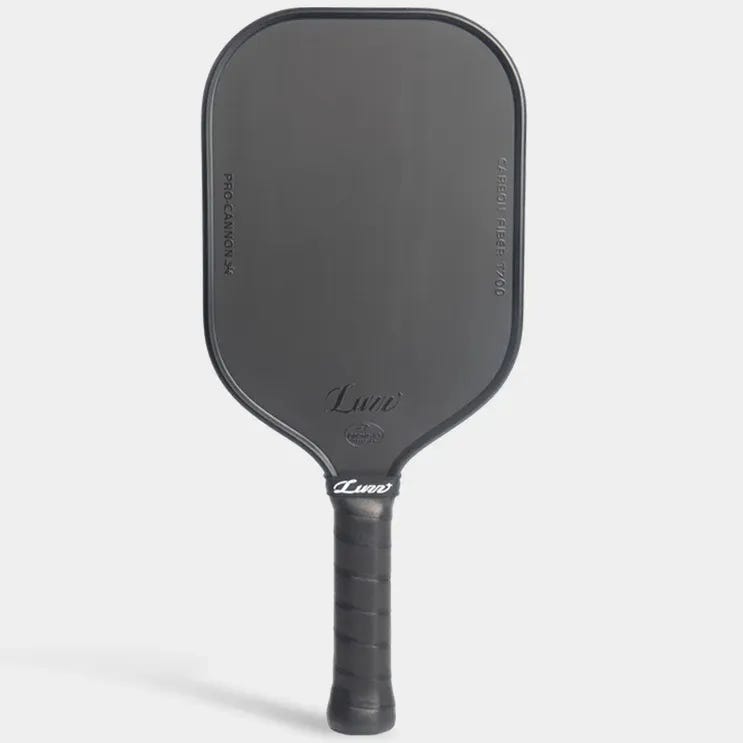
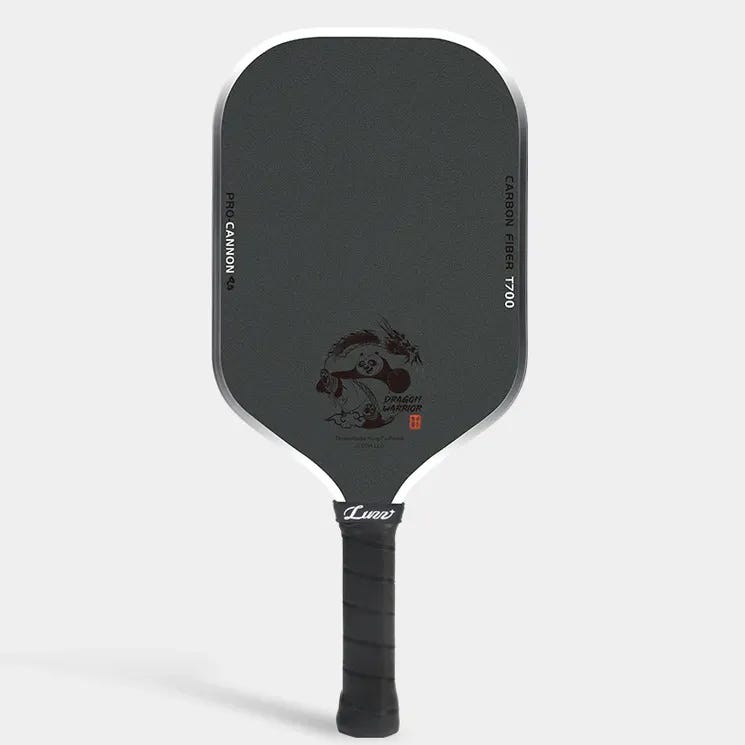
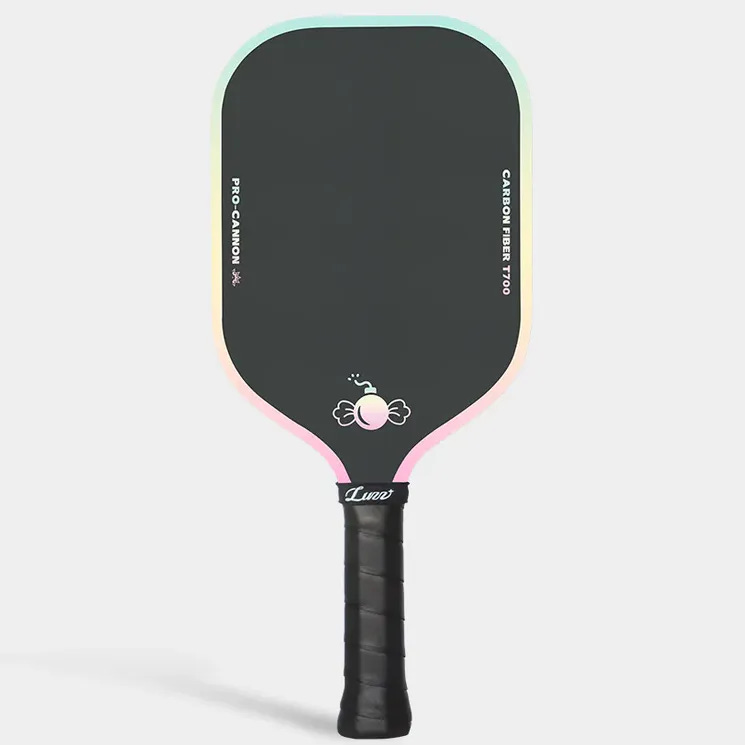
I was definitely skeptical at first. How good can this unassuming $92 paddle be?
After multiple play sessions, I can confirm:
It is the real deal. I could NOT put this paddle down. And for the price, nothing else tournament legal even comes close.
For what it’s worth, during one very long play session I went 4-1 with the Cannon and 0-4 with the Pro IV against very similar opponents. The Cannon made me feel excited to be on the pickleball court. With the Pro IV, I just wanted to pack it up and go home.
Luzz Cannon Origins
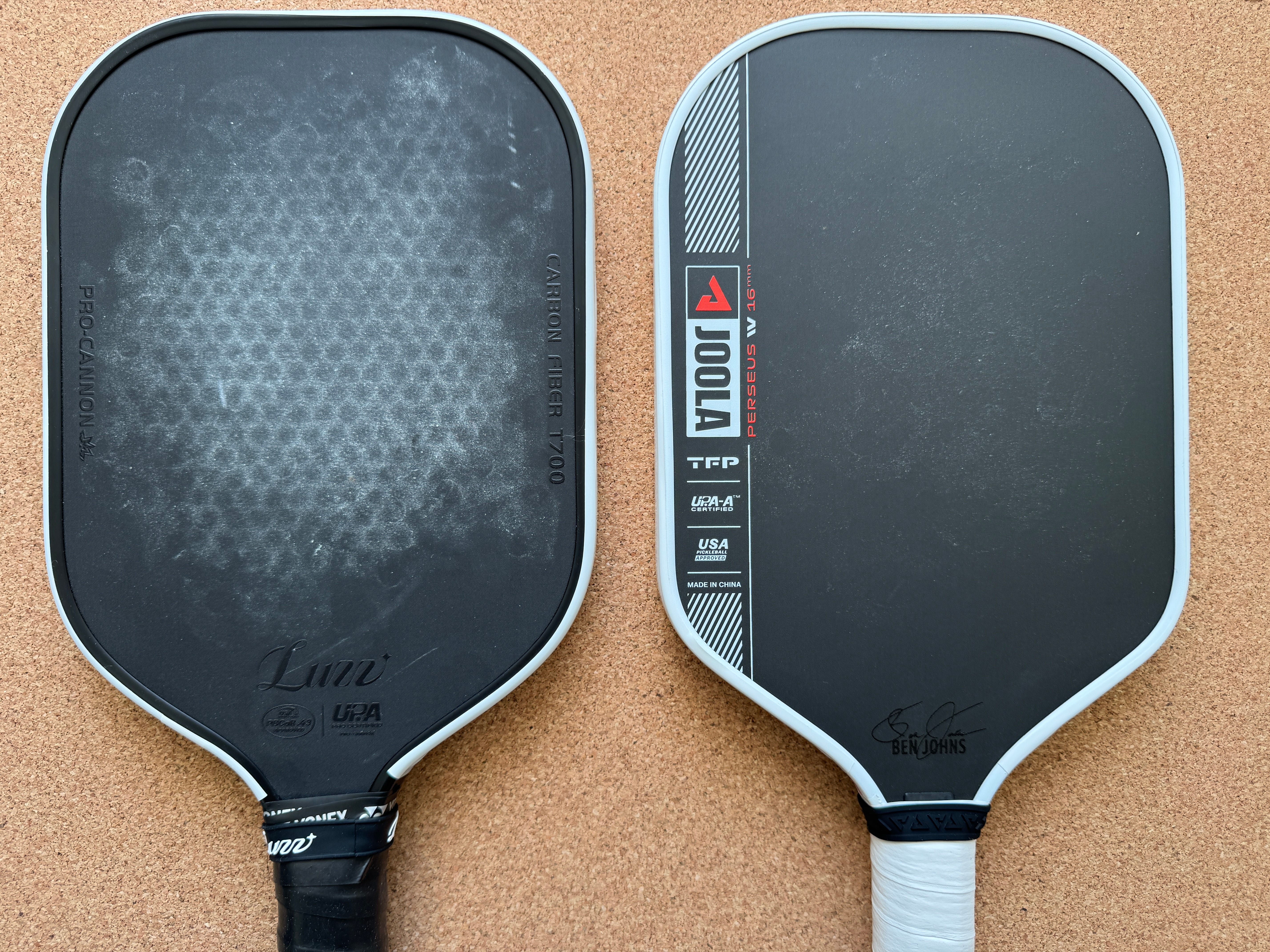
The Luzz Pro Cannon was originally created as a Joola Mod TA-15 Clone and initially received UPAA approval. As we all know, the Mod was eventually de-listed by USAP for not meeting PBCoR .43 testing standards and so the Pro Cannon was in a tough spot with USAP.
Joola then created the Pro IV series that basically added some minor adjustments to the Mod to make it pass PBCoR .43 as well as improve on the QA issues with honeycomb core-crushing.
Luzz similarly went back to the drawing board and did the same thing with the Cannon. Today, it now sports both USAP and UPAA dual certification, performs just like or better than the Pro IV, for a fraction of the price.
X-Rays
Below I have some x-rays of my old Joola Perseus Gen 3 (same/similar construction as a Mod) and the Joola Pro IV compared against an x-ray of the Luzz Cannon (credit to Matt’s Pickleball).
From a construction perspective, the Cannon appears to be a hybrid of the two, where it has the full EVA foam ring that extends completely around the outside of the paddle, whereas the Gen 3 does not put foam near the throat and the Pro IV uses TPE foam inserts near the throat.


Personally, the full foam ring is what I prefer as it gives the greatest amount of control and sweet spot while maximizing the power potential when I take a full swing.
Specs
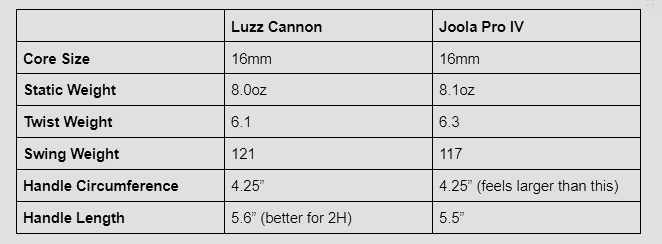
Luzz Cannon beats the Joola Pro IV in almost every way
The Cannon has noticeably better control.
This is where the Cannon truly separates itself. The Pro IV is known for top of the line power and pop, but with that it comes with severe tradeoffs to the soft game.
With the Pro IV I often felt that
• the sweet spot was tighter
• mishits were heavily punished
• the pop made touch shots riskier
With the Cannon, from the first game, I had better command of
• drops
• resets
• dinks
• blocks at the kitchen
• mis-hit recoveries
It simply felt more stable and more predictable.
The difference in kitchen comfort was immediate.
If you have ever felt the Pro IV works against you when trying to soften the ball, the Cannon is a major improvement.
The Cannon has better grit and spin
The Joola Pro IVs seem to have really inconsistent and low grit on the surface even right out of production.
Take a look at this grit sound test comparison video I took. The Cannon I used here has been used across 4-5 sessions and the Pro IV for only a single session and the Cannon still has tons more grit.
With the Cannon, I was hitting very nice topspin drops, drives, and drips which was definitely the most noticeable difference between the Cannon and the Pro IV. Given the current state of paddles where grit wears off quickly, having a paddle like the Cannon with high amounts of initial grit as well as low price point for replacement is super important.
I could shape the ball more easily with this spin, making my dinks and resets also much more controllable.
Power nearly identical to the Joola Pro IV
On big swings for shots, I got the almost same raw power from the Cannon as I did from the Pro IV. For shots like serves, returns, drives, I had no issues matching the Pro IV’s power.
I was noticeably hitting better serves and returns with my Cannon than my current main paddle, the 11six24 Alpha Pro Power. It didn’t take as much of a big swing to generate pace and depth.
One area that the Pro IV did better was raw pop in firefights and blocks. Because the Pro IV is definitely more poppy, even if I mistimed a counter or block, the trampoline effect would kick in and deflect the ball faster than the Cannon.
However, I would still prefer the Cannon for the overall control and it is worth it to trade off raw pop for overall control. For most rec players, there’s no use in the pop of the Pro IV if you cannot even get yourself to the kitchen line due to the lack of control in the Pro IV.
Maneuverability
While the swing weight of the Cannon is reportedly higher (121 vs 117), it did not feel significantly more difficult to swing and counter at the kitchen than the Pro IV.
However, 121 is a fairly high swing weight, and I definitely felt it was harder to swing and react in firefights compared to hybrid/widebody paddles for sure.
I can’t believe how insanely affordable the Cannon is
I really did not have high expectations for the Cannon at first.
While we know from Alibaba clones that paddles don’t need to be high cost to perform well, the Cannon had to go through tons of testing for both USAP and UPAA approval (which can cost tens of thousands of dollars) and the company, Luzz, is heavily investing in advertising and sponsorships. And also providing a 1 year warranty on top.
I thought they must have cut corners somewhere else.
But nope, as you see from my review, the Cannon is just that good and is the lowest priced tournament grade paddle out there.
$92 with discount code “DYPickleball”
I can count on one hand how many paddles out there I would take to a tournament and be confident in its performance while costing < $100. So far, the Cannon has been the best.
If you enjoyed my review and want to support what I do, please consider using my discount code “DYPickleball” on the Luzz website for 15% off all paddles.
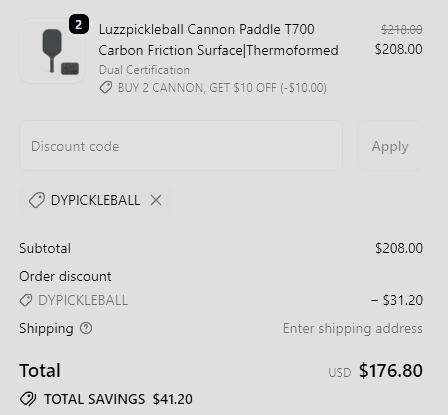
$88 each on Black Friday Sale (buy 2)
For a limited time the week of 11/24, Luzz is running a Black Friday sale on all their paddles (and my discount code “DYPickleball” will stack for another 15% off).
For the Cannon specifically, you can get $10 off when purchasing 2. Split it with a friend or your doubles partner to get this crazy deal.
What about Alibaba clones?
If you play sanctioned tournaments
The Luzz Pro Cannon is absolutely worth the $30-$40 incremental cost over the Alibaba clones.
If you do not play sanctioned tournaments
The Alibaba clones will still be the best value since they are basically sold at cost to manufacture.
Performance wise they can be close, sometimes surprisingly close to the originals.
But remember
• they are not USAP approved
• they have more variability from batch to batch and seller to seller
• there is no warranty beyond the usual return period
The Luzz
Cannon is the more consistent and tournament ready choice.
Final Verdict - It’s not just the price, it’s also performance
The Luzz Cannon is the first paddle under $100s that truly rivals a $280 Joola Pro IV. The only reason I’d consider getting the Joola is if you’ve truly mastered your soft game and need every ounce of extra pop from the Joola.
Personally I am not in that category so the Luzz Cannon would be my paddle of choice.
Let me know in the comments if you have any other paddle recs for me to review!
play a real sport